
As Amazon Affiliate I earn from qualifying purchases
All Roads Lead Here by Suchita Agarwal is about magic, friendship, brotherhood, love, betrayal, and family bonding. This book takes you into a magical world where humans make natural elements dance with their magic. Read the full book review and summary in the article below.
Author: Suchita Agarwal
Cover
Plot
Narration
Characters
Release Date 12 July 2025
Pages 254
Book Review: All Roads Lead Here by Suchita Agarwal
All Roads Lead Here by Suchita Agarwal is a fantasy novel about four teenagers figuring out their magical ability to control the elements of nature. This book is a rollercoaster journey of Parth, who is sometimes confused about his inner magic and is on the verge of breaking up with his boyfriend, Faizal.
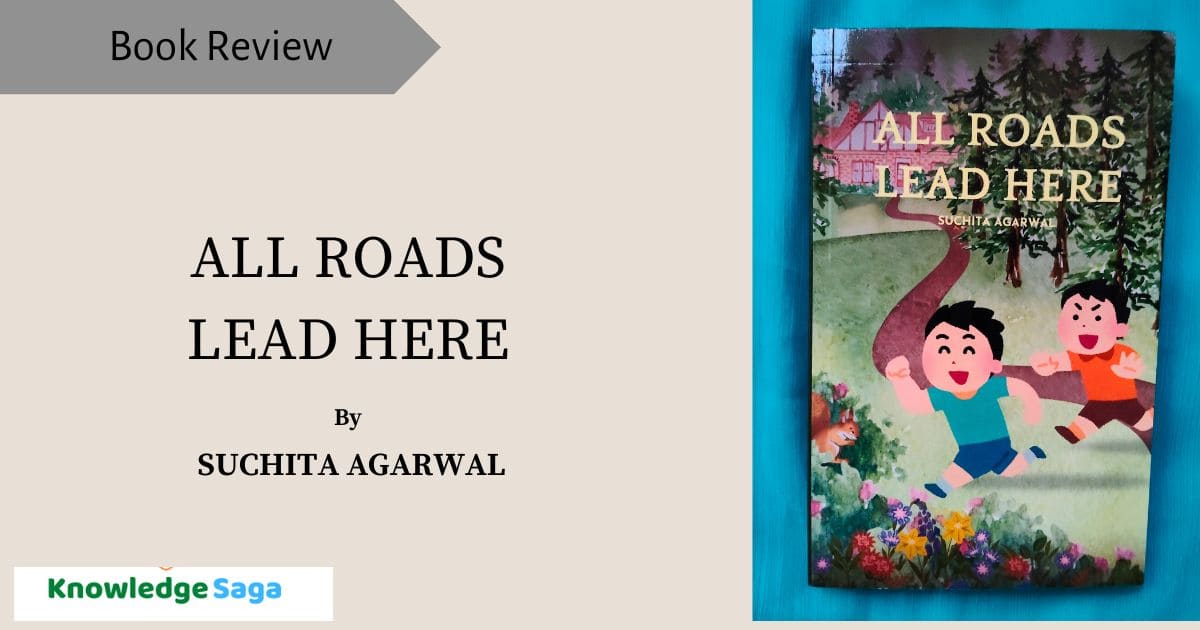
The title and beautiful cover depicting two boys playing and running in the garden match the story’s plot.
The author has beautifully crafted the male protagonist of the story, Parth. He is a gifted boy with an Earth element as his power. With his magic, he can play with the Earth element and create a beautiful garden that awes the fellow students in school.
He is in love with his classmate Faizal, who is intelligent and loves spending time in the chemistry lab. Faizal adores Ms Tasneem, their chemistry teacher in school. But with each passing day, things are not working between Parth and Faizal.
Manvi is another girl at school who is fierce like a lioness. Manvi and Saurabh are best friends in school. Saurabh is a quiet guy who loves to spend time in the library.
Sudhir and Sharmila, Parth’s uncle and aunt, adore him more than his parents and will fight anyone for his safety and well-being.
With skillfully crafted characters, the story flows smoothly, keeping the reader hooked with the magical elements. The book initially starts slow, but after the initial introduction, it flows butter smooth, keeping the reader intrigued with magic, politics, and love.
The book is written in simple English. Through this story, the author has highlighted friendships, the dilemmas that come with being a teenager, and how to stay strong even when fighting with a powerful government body for your loved ones.
I would have loved to read more about Parth’s childhood and his bonding with his parents. The story did not include the detailed reason behind his parents’ separation, and the character of Parth’s father remains a mystery.
Otherwise, it’s a very intriguing book that teenagers and adults can enjoy. Non-readers can start their reading journey if they want to begin with contemporary fantasy fiction that includes love, magic, and politics.
If you love reading books spiked with magic, then I recommend All Roads Lead Here by Suchita Agarwal.
Also Read: Shadow Town by Sreemati Sen
Book Summary: All Roads Lead Here by Suchita Agarwal
Parth is living with his chacha, Sudhir, and chachi, Sharmila, after his parents abandoned him. They are a cheerful family of three making their living by running a lodge named Sunnyside.
He is popular at school because of his magical abilities and has a boyfriend named Faizal. They look like a cheerful couple, but things are not working between them. They are on the verge of breaking up with one another.
With each passing day, the distance between them is increasing due to growing misunderstandings and buried emotions.
Manvi and Saurabh are their classmates in school. Saurabh and Faizal are competitors in school.
Faizal doesn’t like Saurabh because he is his competitor, so Parth also avoids him.
Something about Saurabh always stops Parth from talking to him. But with each passing day, he is losing control over himself and missing a friend who was forcefully separated from him by the government body called Division Bright.
What is stored for Parth and Faizal in the future?
Are Parth’s and Saurabh’s pasts interlinked?
Why was Parth separated from his friend by Division Bright?
To know more, read All Roads Lead Here by Suchita Agarwal.
This review is powered by Blogchatter Book Review Program
I’m so glad that the book managed to intrigue you 😀
Thank you for the review 🙂 so glad you enjoyed it.